Asphalt and Gravel Paved Road Layer Specifications
A paved road specifies a total thickness of 0.4 m with a 0.3 m gravel base and a 0.1 m asphalt layer.
Cross-Section Layer Thickness and Materials
A standard paved road specifies 0.4 m in total thickness. The foundation consists of a 0.3 m base course of  Gravel aggregate. The wearing surface is paved with a 0.1 m layer of Asphalt. In centimeters, total thickness measures 40 cm, comprising 30 cm of gravel base and 10 cm of asphalt. The finished roadway surface specifies a compacted density rating of 1.0.
Road Shoulders and Paved Path Variations
Standard paved roads include unpaved shoulder borders measuring 0.5 m in width. The paved road shoulder density is 0.9. A light paved path uses a 0.1 m foundation of Gravel topped with a 0.05 m layer of Asphalt. This combined paved path structure reaches a total thickness of 0.15 m with a density rating of 1.0.
Material Physical Properties and Slope Limits
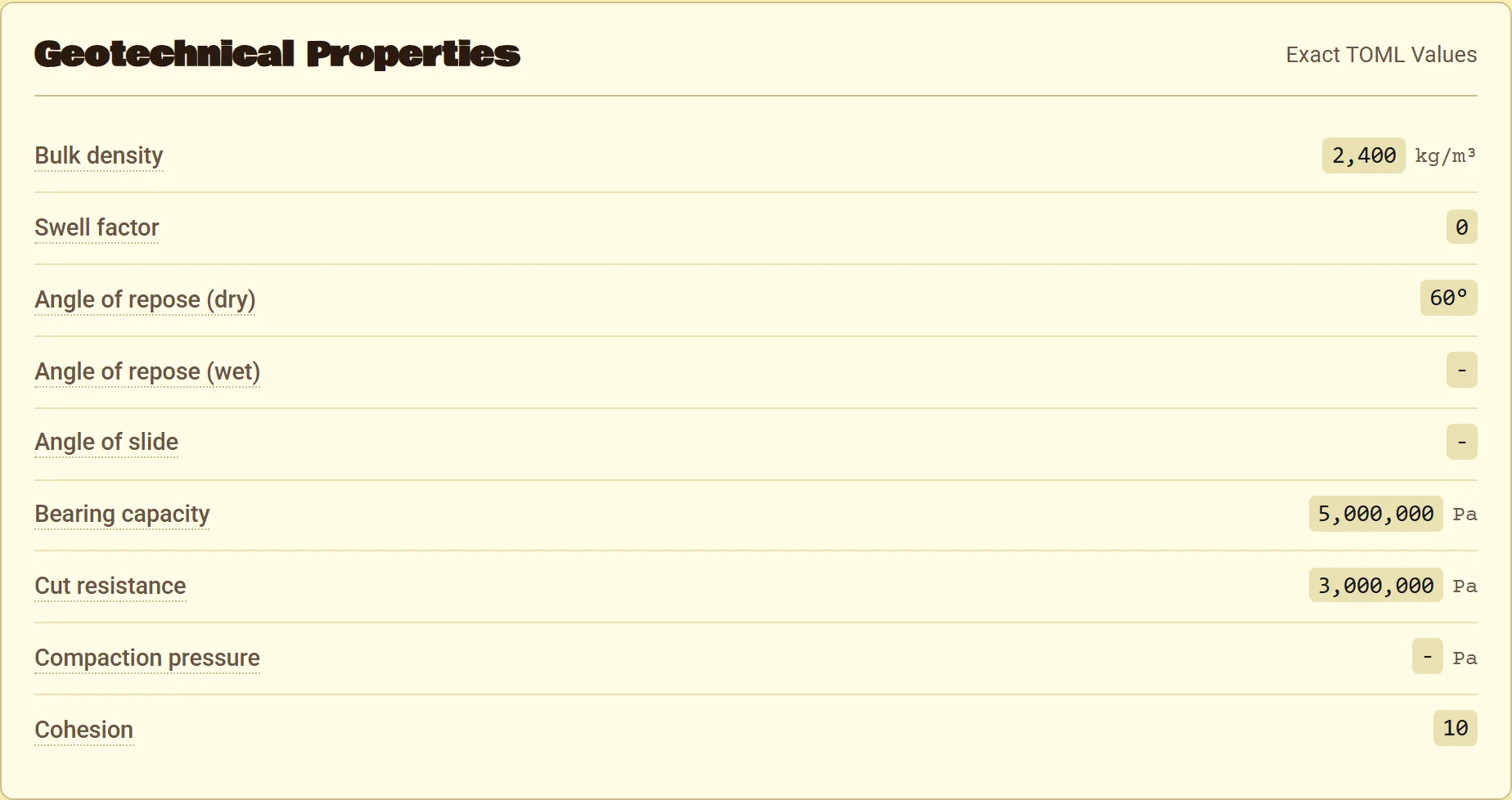
In material specifications, Asphalt has a bulk density of 2400 kg/m3 with 0% swell. The material provides a structural bearing capacity of 5000000 and cut resistance of 3000000. Supporting foundation aggregate Gravel delivers a bearing capacity of 600000 and cut resistance of 270000. The maximum road slope grade permitted in construction is 8 percent. The main road gradient is 6 percent.